
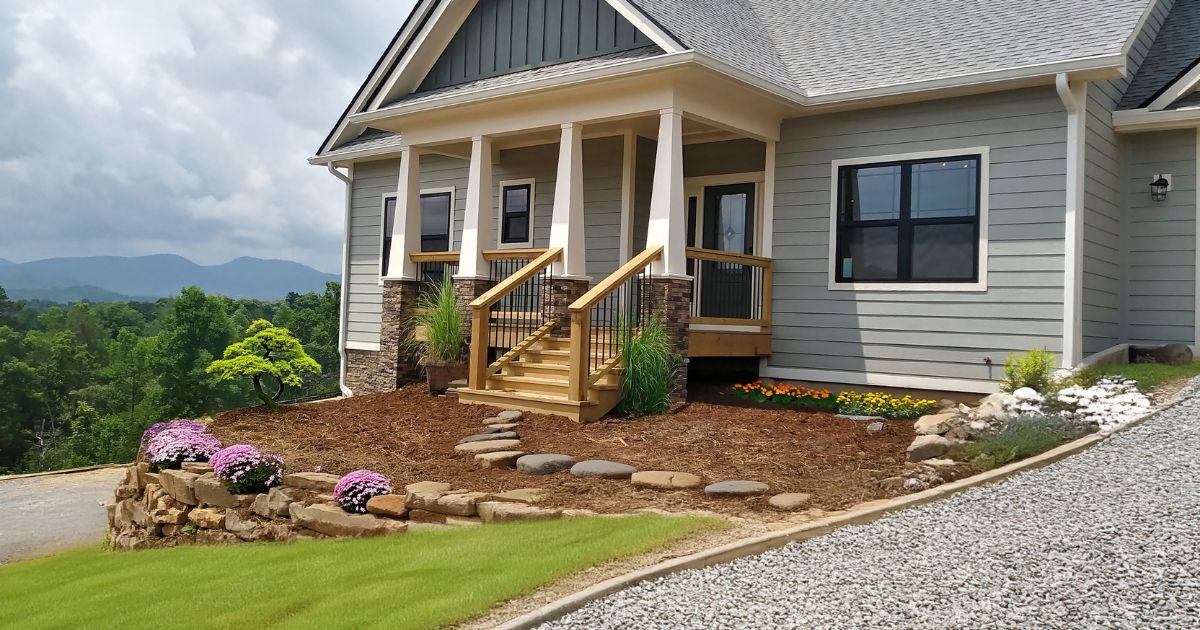
The Biggest Investment You May Ever Make, Building a Custom Home
Building a custom home is one of the largest investments most homeowners and their families will ever make. Long before construction begins, there is one decision that will dictate your entire building experience: choosing your home builder.
Beautiful photos can paint beautiful expectations, but you need to understand the reality of working with a builder. A Pinterest board is not a scope of work. How do they develop a price? How do they communicate during the project? How do they handle changes, manage subcontractors, or respond when something unexpected pops up?
In the North Georgia mountains, it’s especially important to know how your builder would respond, because flat suburban lots rarely ask a builder to negotiate with a boulder, a creek, or a gravel road your GPS describes as “optimistic.”
Before you sign a contract, you should ask questions and expect clear answers.
We put together a list of 12 questions to ask a custom builder in the North Georgia mountains to help you feel confident in your choice. This way, you can fully understand what you’re being offered and enter the custom home construction process with realistic expectations.
Why Asking the Right Questions Before Hiring a Custom Home Builder Matters
When homeowners begin choosing a custom home builder, it’s natural to focus first on costs and what the finished homes look like. But the way a builder gets to that finished home is just as critical.
Two proposals can look like twins and turn out to be distant cousins. One proposal may include detailed specifications for flooring, fixtures, cabinetry, landscaping, appliances, or site preparation. Another may heavily rely on allowances, or it may exclude items that will eventually need to be added to the budget.
The same applies to the construction management process.
It’s important to know:
- who will be on the property
- how often they will be there
- who is going to answer your questions
- how you will know if construction is staying on schedule
- & what happens when you decide to change something
A builder should be able to explain all of those things before you sign on the dotted line.
The National Association of Home Builders also encourages prospective homeowners to ask their custom builder detailed questions about customization, additional costs, warranty policy, included features, and references before making any decisions.
“What will it cost?” is a fair question. It’s also one any builder can answer with a single number, which tells you almost nothing. Look for a builder who you can trust to explain what all that cost represents.
12 Questions to Ask a Custom Home Builder Before You Sign a Contract
1. Can You Provide a Detailed Scope of Work?
This may be the most essential question to ask your custom home builder because it defines what the builder is agreeing to provide for you.
It should go considerably deeper than just square footage, bedroom count, and a general list of finishes. You want to look for details about materials, fixtures, cabinetry, flooring, appliances, exterior finishes, construction specifications, site work, and other major components of your project.
Why does this matter?
Because the more specific the scope of work is before construction begins, the less room there is for confusion later. Specifics are the best protection for both the new homeowner and the custom home builder.
At Fine Line Builders, we take this approach particularly seriously. Our custom home process uses a fixed price built around a detailed 12-page scope of work designed to spell out the features that go into your new home.
2. How Is Your Pricing Structured?
It’s definitely important to ask, “How much will my house cost?” but perhaps even more important, you need to ask how the builder calculates that cost.
Custom home pricing can be structured in several different ways, including fixed-price contracts and cost-plus arrangements. But neither should be treated as just a number that sits at the bottom of a proposal.
Homeowners need to understand how costs are established, which expenses are included, and under what circumstances the final price can change.
Ask:
- What assumptions were used to create this price?
- What costs are fixed?
- Which costs could change?
- What items are excluded?
- What happens if material or labor costs change?
A transparent builder will be willing to walk through the proposal with you, line by line, instead of simply handing you a total and waiting for a check.
3. What Allowances Are Included, and How Do They Work?
An allowance is an estimated dollar amount that’s set aside for selections that have not been finalized when the construction contract is initiated.
You can have allowances for items such as lighting, appliances, tile, countertops, plumbing fixtures, or even flooring.
Suppose your contract includes a lighting allowance of $4,000. If the fixtures you ultimately select total $6,500, you will need to account for the $2,500 difference. Funny how the fixtures you fall in love with are never the ones in the allowance.
That’s why simply knowing that an allowance exists is not enough.
A low estimate with a thin allowance is a little like a cheap airfare: wonderful right up until you want a different seat.
When you compare builders, compare the allowances themselves, not just the final proposal price.
4. How Do You Handle Change Orders?
Changes almost always happen during custom construction. You may decide you’d rather have a really large kitchen island so that you can face the mountain view in the morning.
You might add built-ins for that new mixer you got during the holidays, move an electrical outlet, upgrade your flooring, or choose a different material after you see a space start looking more like your home. Nobody has ever been in a framed-out room and said “exactly as I pictured it” without wanting to move at least one thing. That isn’t indecision. That’s seeing it for real.
The important question is: what happens next?
Ask the builder:
- How are the change orders documented?
- Will I see the price before approving the change?
- Can a change affect the construction timeline?
- Who must authorize the change?
- How are credits handled if I remove something from the original scope?
A good change order process isn’t about preventing homeowners from making changes. It’s about making sure everyone understands the cost, scope, and schedule impact before the work is done.
5. Who Will Supervise Construction Every Day?
The person who sells or designs your custom home may not be the same person who oversees its construction.
It’s important to find out who will manage your project in the field.
Ask whether there’s a superintendent or project manager assigned to your home, how frequently that person will be visiting the job site, and who coordinates the subcontractors and the inspections.
6. How Often Will We Communicate During the Project?
A lot of the frustration people experience during custom builds is not caused by the construction itself. It’s actually caused by uncertainty.
Homeowners want to know: What happened this week? What’s happening next week? Is the project still on schedule, and is there anything else I need to decide?
Ask a prospective builder how those questions will be answered. Some builders like to have regular meetings, while others use project management software, email updates, phone calls, photos, or a combination of those different methods.
There isn’t one universally correct system. (Carrier pigeons technically count, provided they’re reliable.)
What matters is that there is a system.
You also want to ask who your primary point of contact will be and, on average, how quickly you can expect a response to a question.
Clear communication should not wait for problems to occur. It should be part of the construction process from the very beginning.
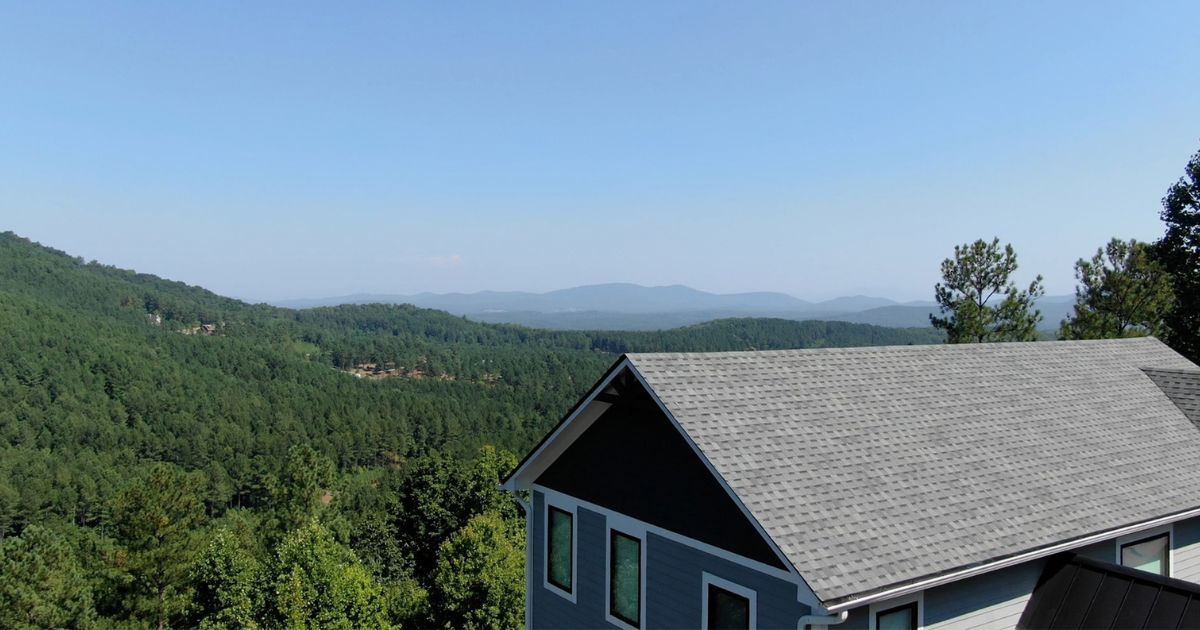
7. What Experience Do You Have Building Mountain Homes in North Georgia?
Building a mountain home isn’t the same as building a conventional home with a better view. The land matters.
Mountain properties will require additional planning related to:
- sloped terrain
- site access
- excavation
- foundation design
- retaining conditions
- water drainage
- septic placement
- erosion control
- utilities
- material deliveries
- weather
- local permitting requirements
Your lot has opinions. A good builder has already heard most of them.
The orientation of the home on the property matters as well, particularly when homeowners want to preserve views while still allowing for practical driveway access, outdoor living areas, drainage, and usable space around the home.
We have created a list of all of the things to take into consideration when building a custom home on scenic land. (Spoiler: the mountain wins, so it helps to know the terms in advance.)
When you interview a mountain home builder in North Georgia, ask about projects completed on sites similar to your own.
Local experience gives a builder practical context for the conditions that can influence the design and construction of a mountain home.
8. Can I Speak With Recent Homeowners?
Yes, check reviews, but reviews only tell you what happened; references tell you what it was like. Notice how quickly the builder hands you a phone number. Recent clients can give you insight into parts of the experience that photographs won’t show.
Consider asking:
- Did the builder communicate consistently?
- Did you understand all of the costs?
- How were your problems addressed?
- Were change orders clearly explained?
- Did the project stay reasonably aligned with the expected schedule?
- Would you hire that builder again?
A reputable builder should be comfortable letting their past work and their past clients speak for their experience.
9. What Is the Estimated Timeline, and What Could Delay It?
A builder should be able to give you a reasonable construction timeline, but be cautious of anyone promising that nothing will ever interfere with it.
Whether it’s because nature chooses to nature, or a supply-chain hiccup, or a rock that wasn’t on the survey, custom construction always needs to account for variables.
Instead of looking for a perfect timeline, ask how your builder creates and manages the schedule.
Find out when major selections need to be completed, how long-lead items are handled, how you’ll be informed about delays, and what the builder does to keep the project moving when something changes.
A realistic schedule with clear communication is far more useful than an aggressive completion date nobody can explain.
10. What Is Included (& Not Included) in Your Proposal?
This question is similar to asking about the scope of work, but it’s worth clarifying. When comparing North Georgia home builders, you want an apples-to-apples comparison.
Ask the builder to identify exclusions, then pay attention to phrases such as:
- owner provided
- to be determined
- not included
- allowance
- by others
- additional cost
None of these phrases are automatically a problem. The concern is whether you understand what they mean for your total budget. “By others” deserves a translation: sometimes the “others” turn out to be you.
The clearest proposal isn’t necessarily the shortest one. Often, the opposite is true.
11. How Do You Handle Permits and Inspections?
Permits are nobody’s favorite part of building a home, which is exactly why someone should clearly own them. Homeowners should understand who’s responsible for coordinating them.
It’s important to ask whether your builder obtains required building permits, schedules the inspections, handles the corrections if necessary, and communicates with the appropriate local authorities during construction.
If engineers, surveyors, septic professionals, or other specialists will be involved, ask how those relationships are coordinated and whether their work is included in the proposal.
You don’t need to become an expert in every permit involved in building your home. You should, however, know who’s responsible for making sure the appropriate requirements are attended to.
12. What Makes Your Building Process Different From Other North Georgia Home Builders?
Give the builder an opportunity to explain their process in their own words. You’re listening for specifics. (If the answer is “it depends,” ask what it depends on.)
- What happens after the first meeting?
- How is the design developed?
- How is price established?
- When do selections happen?
- How are questions handled?
- Who oversees construction, and what happens before closing?
Our process at Fine Line Builders is rooted in Dream, Design, Build, Enjoy, taking homeowners from the initial vision and design process with an intensive selection process through construction and completion. We like to emphasize upfront pricing, detailed project specifications, clear communication, and one-of-a-kind custom homes.
Whichever builder you choose, their answer to this question should give you a clearer picture of what it’s actually going to be like to work with them.
Red Flags to Watch for When Choosing a Custom Home Builder
Knowing what to ask is important, but knowing which answers should concern you is equally valuable.
- Watch for builders who provide vague estimates without explaining what’s included.
- Avoid discussing allowances.
- Can’t clearly explain the change order process.
- Won’t provide recent references.
- Promises an unusually fast timeline without explaining how it was developed.
- Can’t identify who will supervise the job.
- Has no clear communication process.
- Leaves major portions of the proposal undefined.
- Seems uncomfortable when you ask detailed pricing questions.
- Has limited experience with the type of property you plan to build on.
None of these make someone a bad person. They do mean you’ll be doing a lot of wondering.
One of the biggest red flags may simply be difficulty getting clear answers before you’ve signed the contract.
Custom home construction includes making hundreds of decisions. If communication is difficult during the sales process, it’s reasonable to ask what communication will look like once the construction process becomes more complicated. If it’s hard to get a straight answer while they’re earning your business, imagine change order number seven…
Why Experience Building Custom Mountain Homes Makes a Difference
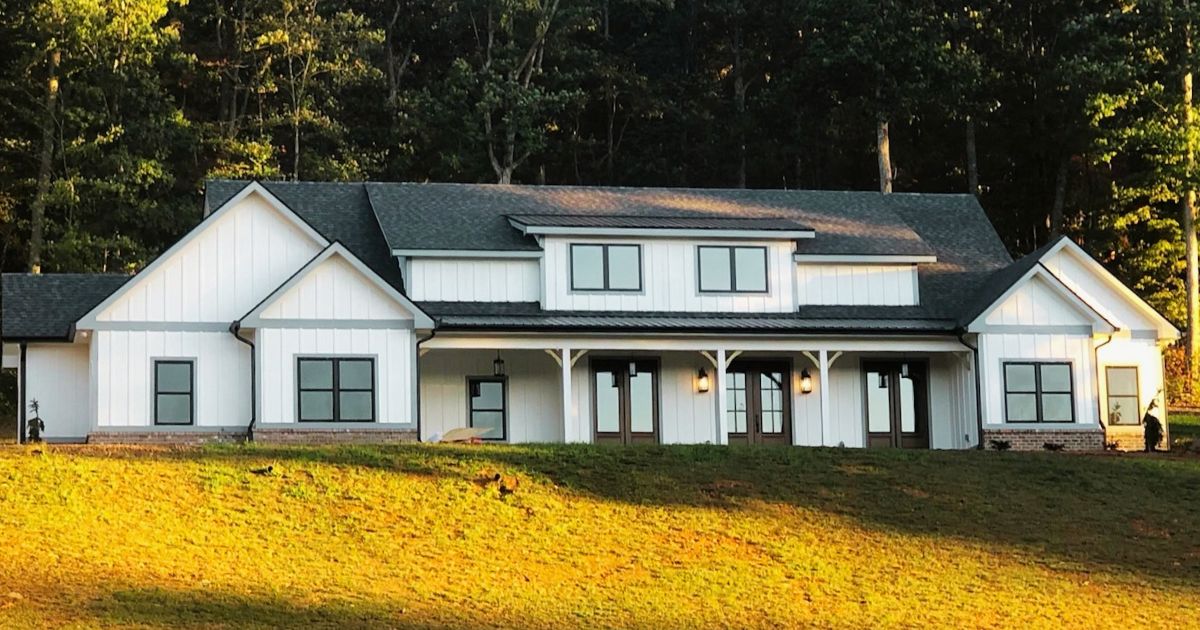
North Georgia offers some of the most spectacular settings for custom homes, with mountain ridges, wooded properties, streams, valleys, and long-range views. Those same features can also influence how a home needs to be designed and built.
A steep lot may change excavation and foundation requirements. Driveway access can affect the site plan. Water will find its own route. A good builder makes sure it’s one you chose. The location of utilities, septic systems, retaining features, and outdoor living spaces may all need to work within the contours of the property.
Sometimes the smartest design decision is about what not to change. The mountain was here first. It has seniority.
An experienced mountain home builder considers how the house relates to the land instead of treating the site as something that simply needs to be flattened and built upon.
That’s one reason Fine Line Builders emphasizes designs tailored not only to the homeowner but also to the North Georgia setting, including the usual style of natural materials and floor plans designed around the property and lifestyle.
If you’re still learning about what to expect, explore our custom home building services, learn more about Fine Line Builders, and review our guide to the custom home building process.
Ready to Build Your North Georgia Dream Home?
You don’t need to have picked your doorknobs to have a great first conversation. Bring the land photos. Bring the Pinterest board, even. You should, however, feel comfortable asking questions and getting clear answers.
At Fine Line Builders, we believe homeowners deserve to understand what they’re building, what they’re paying for, and what to expect throughout the process.
If you’re considering a custom home in Young Harris, Blairsville, Hiawassee, or anywhere in Towns or Union Counties, schedule a consultation with Fine Line Builders to start the conversation today!
0 Comments